
Introduction
Robotics is one of the fastest-growing fields in the modern world, transforming industries, education, healthcare, manufacturing, and even our daily lives. From robotic vacuum cleaners and automated factory machines to advanced medical robots and space exploration devices, robots are becoming increasingly common. This Beginner’s Guide to Robotics is designed to help newcomers understand the fundamentals without requiring a technical background.
If you have ever wondered how robots work, what components they use, or how you can begin learning robotics, this guide will provide clear and practical answers. Robotics combines several disciplines, including mechanical engineering, electronics, programming, and artificial intelligence. Although this may sound complex, beginners can start with simple projects and gradually build their knowledge.
Learning robotics also improves problem-solving, creativity, logical thinking, and teamwork. Whether you are a student, hobbyist, educator, or someone looking for a future-ready skill, robotics offers countless opportunities. By understanding the basics and practicing with beginner-friendly projects, anyone can develop valuable technical skills.
In this Beginner’s Guide to Robotics, you will learn what robotics is, why it matters, how to start your learning journey, common mistakes to avoid, and expert tips that will help you succeed.
What is Beginner’s Guide to Robotics?

A Beginner’s Guide to Robotics introduces the essential concepts of designing, building, programming, and controlling robots. A robot is a programmable machine capable of performing tasks automatically or with human guidance.
Most robots include several key components:
- Mechanical structure or body
- Sensors to collect information
- Motors or actuators for movement
- Controller or microcontroller
- Power supply
- Software or programming code
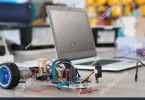
For example, a simple obstacle-avoiding robot uses distance sensors to detect objects, processes the information through a controller, and instructs motors to change direction.
Robotics is not limited to industrial machines. Educational robots, home assistants, drones, agricultural robots, and medical robots all rely on the same basic principles.
Why is Beginner’s Guide to Robotics Important?
Robotics is shaping the future of nearly every industry. Learning robotics early provides a strong foundation for careers in science, engineering, automation, and technology.
Here are several reasons why robotics is important:
- Encourages critical thinking
- Improves programming skills
- Builds engineering knowledge
- Develops creativity through hands-on projects
- Supports STEM education
- Opens career opportunities
- Encourages innovation
- Helps solve real-world problems
As automation continues to expand worldwide, robotics skills are becoming increasingly valuable for students and professionals alike.
Detailed Step-by-Step Guide
Step 1: Understand Robotics Fundamentals
Before building a robot, learn the basic concepts. Understand what robots do, how sensors collect information, and how controllers make decisions.
Spend time learning about simple circuits, electricity, programming logic, and mechanical movement.
Step 2: Learn Basic Programming
Programming is the brain of every robot.
Popular beginner-friendly languages include:
- Python
- C++
- Scratch
- Arduino Programming Language
Start by writing simple programs such as blinking LEDs, reading sensors, or controlling motors.
Step 3: Learn Electronics Basics
Robots rely on electronic components working together.
Important concepts include:
- Voltage
- Current
- Resistance
- Breadboards
- LEDs
- Switches
- Resistors
- Batteries
Understanding electronics helps you troubleshoot problems during projects.
Step 4: Explore Microcontrollers
Microcontrollers control robot behavior.
Popular beginner options include:
- Arduino Uno
- ESP32
- Raspberry Pi Pico
- BBC micro:bit
These affordable boards allow beginners to build countless robotics projects.
Step 5: Learn About Sensors
Sensors allow robots to understand their surroundings.
Common sensors include:
- Ultrasonic sensors
- Infrared sensors
- Temperature sensors
- Light sensors
- Motion sensors
- Touch sensors
Without sensors, robots cannot react intelligently to changing environments.
Step 6: Understand Motors
Motors create movement.
The most common types are:
- DC motors
- Servo motors
- Stepper motors
Each motor serves different purposes depending on the robot’s design.
Step 7: Build Simple Projects
Practice is the fastest way to learn robotics.
Beginner projects include:
- LED blinking circuit
- Line-following robot
- Obstacle-avoiding robot
- Bluetooth-controlled robot
- Robotic arm
- Mini delivery robot
Each project teaches new concepts while reinforcing previous knowledge.
Step 8: Learn Robot Design
A robot’s mechanical structure determines how effectively it performs tasks.
Consider:
- Weight
- Stability
- Wheel placement
- Material strength
- Battery location
Even simple design improvements can greatly increase performance.
Step 9: Test and Improve
Every robotics project requires testing.
Observe how your robot performs and identify issues.
Common improvements include:
- Better sensor placement
- Faster programming
- Improved battery management
- More efficient movement
Continuous improvement is part of every successful robotics project.
Step 10: Join the Robotics Community
Learning becomes easier when you connect with others.
Consider joining:
- School robotics clubs
- Local workshops
- Online communities
- Coding competitions
- STEM events
Sharing ideas accelerates learning and keeps motivation high.
Benefits of Beginner’s Guide to Robotics
Learning robotics offers numerous advantages:
- Improves logical thinking
- Encourages creativity
- Builds confidence
- Develops teamwork skills
- Strengthens programming knowledge
- Enhances engineering understanding
- Promotes innovation
- Prepares students for future careers
- Improves problem-solving ability
- Makes STEM education more engaging
- Creates opportunities in automation industries
- Helps understand emerging technologies
Disadvantages / Risks
Although robotics offers many benefits, beginners should understand its challenges.
- Initial equipment costs can be high.
- Programming requires patience.
- Electronic components may be damaged through incorrect wiring.
- Complex projects may become frustrating.
- Continuous learning is necessary.
- Hardware troubleshooting can take time.
- Batteries require proper handling.
- Beginners may become overwhelmed by advanced concepts if they skip the basics.
Fortunately, these challenges become easier with consistent practice and gradual learning.
Common Mistakes to Avoid
Many beginners experience similar difficulties when learning robotics.
Avoid these common mistakes:
- Skipping fundamental programming concepts.
- Ignoring electronics basics.
- Purchasing expensive equipment too early.
- Copying projects without understanding them.
- Forgetting to test each component individually.
- Poor cable management.
- Using incorrect power supplies.
- Giving up after early failures.
- Ignoring documentation.
- Trying advanced projects before mastering beginner projects.
Remember that every experienced robotics engineer started by learning simple concepts.
FAQs
Is robotics difficult for beginners?
No. Robotics becomes much easier when you learn one topic at a time. Starting with simple projects builds confidence and practical skills.
Do I need programming knowledge before learning robotics?
No. Many beginners learn programming alongside robotics. Languages like Python and Arduino programming are beginner-friendly and widely supported.
What is the best robotics kit for beginners?
Arduino-based starter kits are excellent because they include sensors, motors, LEDs, and step-by-step tutorials that help beginners build projects quickly.
How long does it take to learn robotics?
Basic robotics concepts can be learned in a few weeks with regular practice. Becoming proficient typically takes several months of consistent learning and project work.
Can children learn robotics?
Yes. Many educational robotics kits are specifically designed for children and teenagers, making robotics an enjoyable way to learn science, technology, engineering, and mathematics.
What careers use robotics?
Robotics careers include robotics engineer, automation engineer, software developer, electronics engineer, AI specialist, manufacturing engineer, healthcare technology expert, and research scientist.
Expert Tips & Bonus Points
Learning robotics successfully requires curiosity and consistency rather than expensive equipment. Focus on understanding concepts instead of memorizing instructions. Build one small project at a time and gradually increase complexity. Keep a notebook to document ideas, wiring diagrams, and programming solutions.
Practice debugging because identifying problems is an essential engineering skill. Read datasheets for components to understand their capabilities and limitations. Watch how real-world robots solve practical problems in industries like healthcare, agriculture, logistics, and manufacturing.
Challenge yourself by modifying existing projects instead of simply copying them. For example, add an extra sensor, improve movement accuracy, or redesign the robot’s structure. These small improvements strengthen your creativity and technical confidence.
Finally, stay updated with new robotics technologies. The field evolves rapidly, and continuous learning will help you remain prepared for future innovations and career opportunities.
Conclusion

This Beginner’s Guide to Robotics demonstrates that robotics is an exciting and rewarding field accessible to learners of all ages. While robotics combines programming, electronics, mechanics, and design, beginners do not need advanced knowledge to get started. By learning the fundamentals step by step, building simple projects, and practicing consistently, anyone can develop valuable robotics skills.
The journey begins with understanding basic components such as sensors, motors, controllers, and programming. As your experience grows, you can explore more advanced concepts, including automation, artificial intelligence, and autonomous systems. Every successful project increases your confidence and prepares you for bigger challenges.
Robotics is more than building machines—it encourages creativity, innovation, teamwork, and problem-solving. These abilities are valuable in education, professional careers, and everyday life. Whether your goal is to pursue engineering, create personal projects, or simply understand modern technology, investing time in robotics is a smart decision.
Start with small, achievable goals, continue learning from every project, and enjoy the process. With dedication and consistent practice, your robotics journey can lead to exciting opportunities in one of the world’s most dynamic and rapidly growing fields.