
introduction
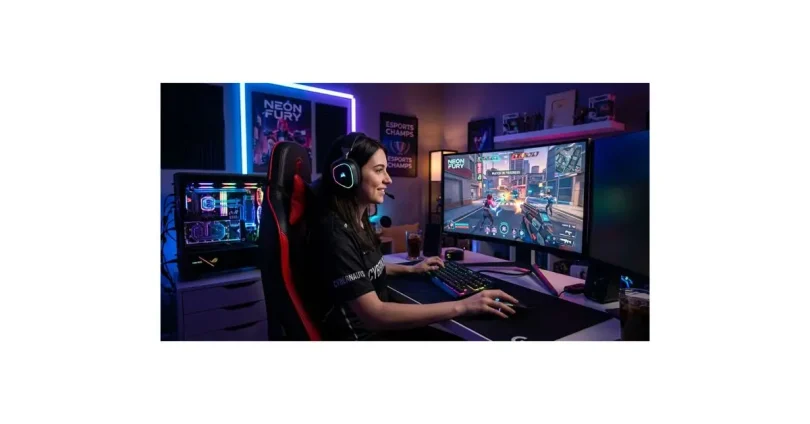
Gaming technology is moving beyond the simple race for faster processors and better graphics. In 2026, some of the most important changes are happening behind the screen: AI is entering development workflows, cloud services are changing how games are delivered, and handheld PCs are making full-scale PC gaming more portable.
At the same time, the industry is becoming increasingly connected. PC, console, mobile, handheld, and cloud platforms are no longer as separate as they once were.
But not every technology receiving attention today is equally mature. Some are already useful to players, while others are still developing.
AI Is Changing How Games Are Made
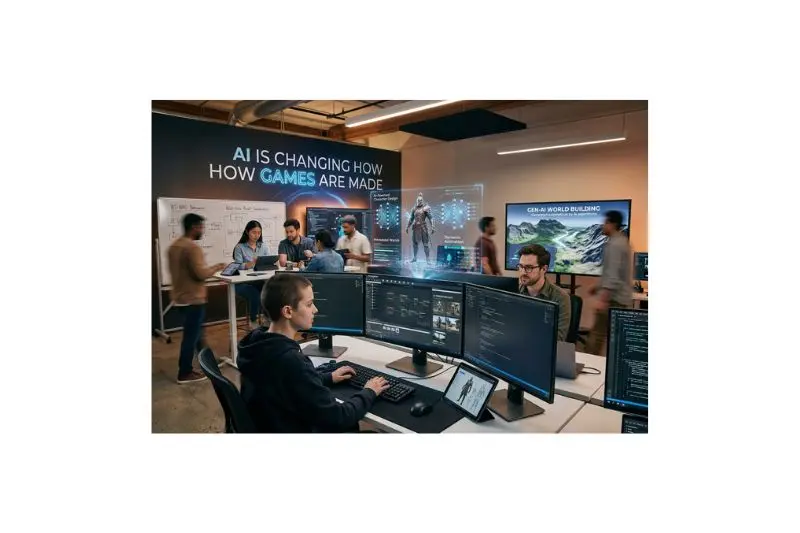
Artificial intelligence is one of the most significant technology shifts affecting gaming. Its impact is not limited to AI-controlled enemies or recommendation systems; developers can also use AI-assisted tools during parts of the production process.
Potential applications include:
- Creating early concepts and prototypes
- Assisting with code and development workflows
- Testing games and identifying bugs
- Generating or adapting certain game assets
- Supporting localization workflows
- Analyzing player behavior
- Creating more responsive NPC systems
The important distinction is between AI as a development tool and AI as a player-facing feature.
Generative AI can potentially reduce the time required for certain repetitive development tasks. However, questions around quality, originality, copyright, reliability, and human oversight remain important.
Cloud Gaming Is Reducing Hardware Dependence
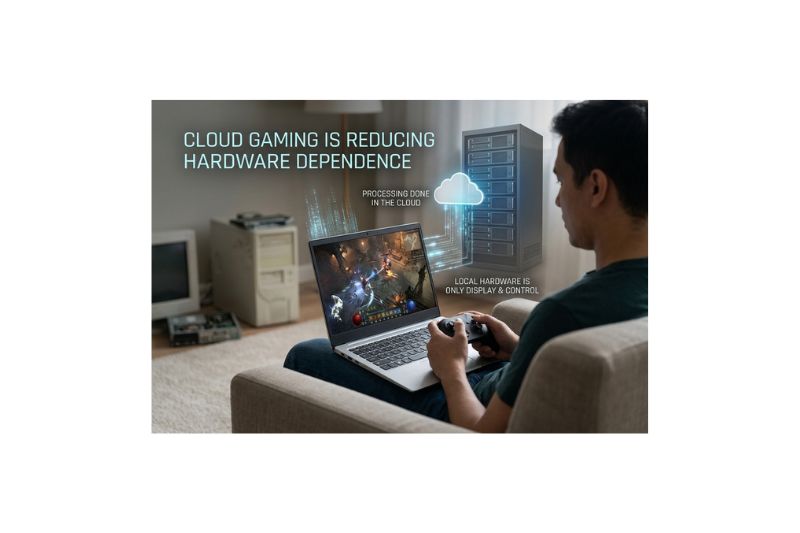
Traditional gaming requires much of the processing work to happen on the player’s device. Cloud gaming takes a different approach: games can be processed on remote servers and streamed to compatible devices.
This can potentially allow players to access demanding games without owning a high-end gaming PC or console.
How Cloud Gaming Works
- The game runs on a remote server.
- The server processes the game.
- The resulting video is streamed to the player’s device.
- The player’s inputs are sent back to the server.
- The system continuously exchanges data between the device and server.
The biggest advantage is flexibility. A player may be able to access games across different screens without installing or running the entire game locally.
The biggest challenge is the network connection. Latency, bandwidth, server availability, and image quality can all affect the experience.
Cloud gaming is therefore less about replacing gaming hardware and more about changing where the computing happens.
Handheld Gaming PCs Are Expanding Portable Gaming
Portable gaming has become an important part of the hardware market, particularly with devices that combine PC hardware with a handheld form factor.
Modern handheld PCs can provide access to large PC game libraries while allowing players to play away from a traditional desktop setup.
| Feature | Traditional Gaming PC | Handheld Gaming PC |
|---|---|---|
| Portability | Low | High |
| Game library | Large | Large |
| Screen included | Usually no | Yes |
| Upgrade flexibility | Higher | More limited |
| Performance ceiling | Higher | More constrained |
| Battery dependence | Low | High |
The trade-off is straightforward: portability comes at the cost of power, battery life, thermals, or upgradeability.
Handheld gaming PCs are therefore not necessarily replacing desktop gaming. Instead, they provide another way to access PC games.
Cross-Platform Gaming Is Becoming More Important
The boundaries between gaming platforms are becoming less rigid.
A modern player may interact with the same game ecosystem through:
- PC
- Console
- Mobile
- Handheld devices
- Cloud services
Cross-platform progression and multiplayer can make this ecosystem even more connected.
For players, the main benefit is convenience. Someone may begin playing on one device and continue on another, depending on how the game and platform ecosystem are designed.
For developers and publishers, cross-platform releases can potentially increase the addressable audience, but they also create technical and design challenges.
VR, AR and XR Continue to Develop
Virtual reality (VR), augmented reality (AR), and extended reality (XR) remain important areas of gaming technology.
VR places the player inside a digitally rendered environment.
AR overlays digital elements onto the real world.
XR is a broader term covering technologies that combine or extend physical and digital environments.
These technologies can create experiences that conventional displays cannot easily reproduce.
However, adoption depends on more than visual immersion. Hardware price, comfort, software availability, accessibility, and the quality of available experiences all influence whether players continue using these devices.
How These Technologies Work Together
The most interesting development is that these technologies do not exist independently.
Consider a hypothetical future game:
- AI-assisted development — Developers use AI-supported tools during parts of production and testing.
- Powerful game infrastructure — The game is built to operate across different hardware configurations.
- Cloud connectivity — Some processing or game services can be handled remotely.
- Cross-platform ecosystem — Players can access the game from multiple supported devices.
- Portable hardware — A handheld PC provides another way to play the same ecosystem.
- Immersive options — Where supported, XR technology provides an alternative gameplay experience.
The future of gaming technology is increasingly becoming an ecosystem rather than a single piece of hardware.
Benefits of Modern Gaming Technology
Better Accessibility
Cloud and cross-platform technologies can give players more ways to access games.
Greater Portability
Handheld gaming PCs allow players to take larger game libraries with them.
Faster Development Workflows
AI-assisted development may help teams automate or accelerate certain repetitive tasks.
More Immersive Experiences
VR and related technologies can create interaction models that traditional screens cannot replicate.
Connected Ecosystems
Cross-platform systems can bring players, purchases, progression, and services closer together.
Drawbacks and Limitations
Internet Dependence
Cloud gaming can be heavily affected by network quality.
Hardware Limitations
Portable systems must balance performance, heat, weight, and battery life.
AI Reliability
AI-generated or AI-assisted output still requires human review and quality control.
Platform Fragmentation
Different operating systems, stores, controllers, and hardware configurations can complicate development.
Cost
New gaming hardware and premium services can increase the total cost of participation.
Adoption Uncertainty
A technology can receive significant attention without becoming mainstream. Player demand ultimately determines whether emerging technologies become lasting parts of gaming.
What Actually Matters?
The most useful way to evaluate gaming technology is to separate maturity from hype.
| Technology | Current Value | Main Limitation |
|---|---|---|
| AI-assisted development | High potential | Quality, reliability and oversight |
| Cloud gaming | Increasingly practical | Network dependency |
| Handheld gaming PCs | Strong use case | Battery and performance constraints |
| Cross-platform gaming | Highly useful | Technical and platform limitations |
| VR/XR gaming | Specialized but developing | Hardware, comfort and adoption |
The key takeaway is that newest does not automatically mean most important.
A technology becomes genuinely valuable when it solves a problem players or developers actually have.
Common Mistakes
Assuming Every New Technology Will Become Mainstream
A technology can attract significant attention without becoming a standard part of gaming.
Treating AI as a Replacement for Developers
AI can assist with selected development tasks, but game design still requires human creative direction, testing, judgment, and quality control.
Ignoring Network Limitations
Cloud gaming can be convenient, but a poor or unstable internet connection can affect responsiveness and streaming quality.
Choosing Hardware Based Only on Specifications
Battery life, software compatibility, controls, display quality, thermals, portability, and price can matter just as much as specifications.
Confusing Immersion With Better Gameplay
VR and XR can create impressive experiences, but immersion alone does not guarantee that a game is enjoyable or useful.
Ignoring the Ecosystem
A gaming device should be evaluated alongside its operating system, game library, services, accessories, and platform compatibility.
Myths vs. Reality
| Myth | Reality |
|---|---|
| AI will completely replace game developers. | AI can assist development, but human creativity, direction and quality control remain important. |
| Cloud gaming makes gaming hardware unnecessary. | Cloud gaming can reduce local hardware requirements, but network infrastructure still matters. |
| Handheld gaming PCs are replacing desktop PCs. | They provide another way to play PC games with different performance and portability trade-offs. |
| More graphics power always means a better gaming experience. | Performance is only one part of the overall experience. |
| VR is automatically the future of all gaming. | VR is an important technology, but adoption and use cases vary considerably. |
| Every gaming technology trend is worth investing in. | Technology should be evaluated according to usefulness, maturity and long-term support. |
FAQs
What is the biggest gaming technology trend in 2026?
AI, cloud gaming, portable gaming PCs, and cross-platform ecosystems are among the major gaming technology trends in 2026.
How is AI being used in gaming?
AI can support game development, testing, content workflows, player analytics, localization, and some player-facing experiences.
Is cloud gaming better than PC gaming?
Not universally. Cloud gaming can provide convenience and reduce the need for powerful local hardware, but traditional PC gaming can offer greater local control and avoid some network-related limitations.
Are handheld gaming PCs worth considering?
They can be useful for players who prioritize portability and want access to PC games away from a desktop. Their limitations include battery life, heat, controls, screen size, and lower performance than many full-sized gaming PCs.
Will VR become mainstream gaming technology?
VR has continued to develop, but whether it becomes mainstream depends on hardware cost, comfort, software availability, accessibility, and sustained consumer demand.
What technology will shape the future of gaming?
There is unlikely to be one technology responsible for gaming’s future. AI, cloud infrastructure, portable hardware, cross-platform systems, and immersive technologies are more likely to develop together.
Conclusion
The most important gaming technology trends in 2026 are not simply about making games look better. They are changing where games run, how they are created, how players access them, and how different platforms connect.
AI is becoming increasingly relevant to development workflows. Cloud gaming is exploring new models for delivering games. Handheld PCs are making PC gaming more portable, while cross-platform ecosystems are reducing barriers between devices. VR and XR continue to explore new forms of interaction.
For players, the best technology is ultimately the one that solves a real problem. For developers, the strongest opportunities are technologies that improve workflows or create experiences players genuinely value.
The future of gaming is therefore less about one revolutionary device and more about AI + hardware + software + networks working together.