
Introduction
When buying a new desktop or laptop, one of the biggest decisions you’ll face is choosing between Intel and AMD processors. The debate around Intel vs AMD Processors Compared has continued for years, and both companies have made incredible improvements in performance, efficiency, and value. Today, the right choice depends less on brand loyalty and more on your personal needs, budget, and workload.
Whether you’re building a gaming PC, upgrading your office computer, editing videos, or simply browsing the web, selecting the right processor directly affects your computer’s speed and overall experience. Modern CPUs from both manufacturers offer impressive performance, making it harder than ever to declare one brand as the universal winner.
In this detailed guide, we’ll break down the differences between Intel and AMD processors in simple language. You’ll learn how each processor works, where each brand excels, and which one delivers better value for different users. We’ll also compare gaming performance, productivity, power efficiency, pricing, upgrade options, and much more.
By the end of this Intel vs AMD Processors Compared guide, you’ll have the knowledge needed to confidently choose the processor that best matches your computing needs and budget.
What is Intel vs AMD Processors Compared?
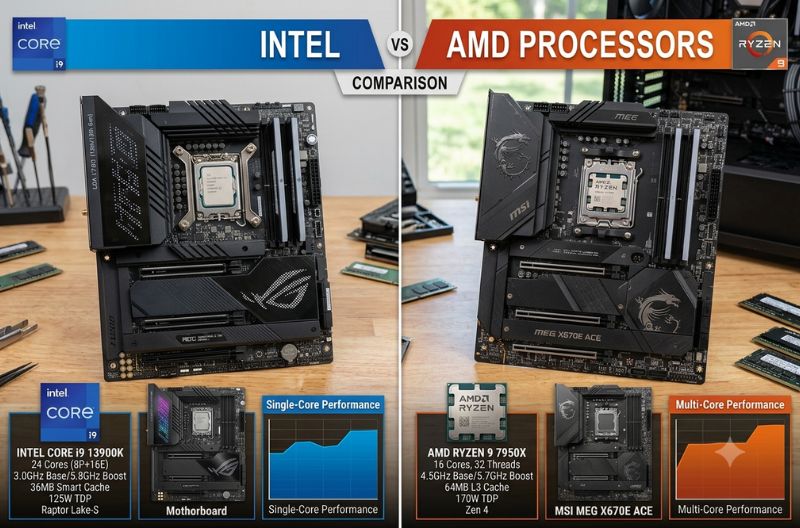
Intel vs AMD Processors Compared** refers to evaluating the strengths, weaknesses, performance, pricing, and overall value of processors manufactured by Intel and AMD.
A processor, also known as the CPU (Central Processing Unit), acts as the brain of your computer. Every task—from opening applications to gaming, editing videos, and multitasking—depends on how efficiently the CPU processes instructions.
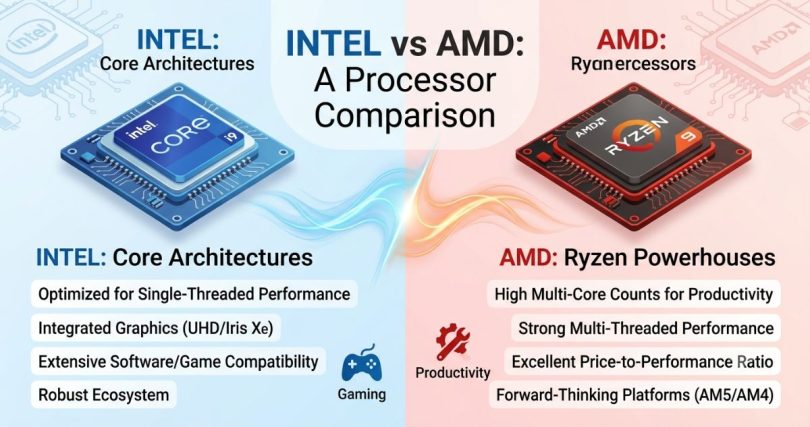
Intel has long been recognized for its strong single-core performance, reliability, and broad software compatibility. AMD, on the other hand, has gained tremendous popularity by offering more cores, competitive performance, and excellent value for money.
Both companies now compete closely across nearly every price range, making it essential to compare them carefully before making a purchase.
Why is Intel vs AMD Processors Compared Important?
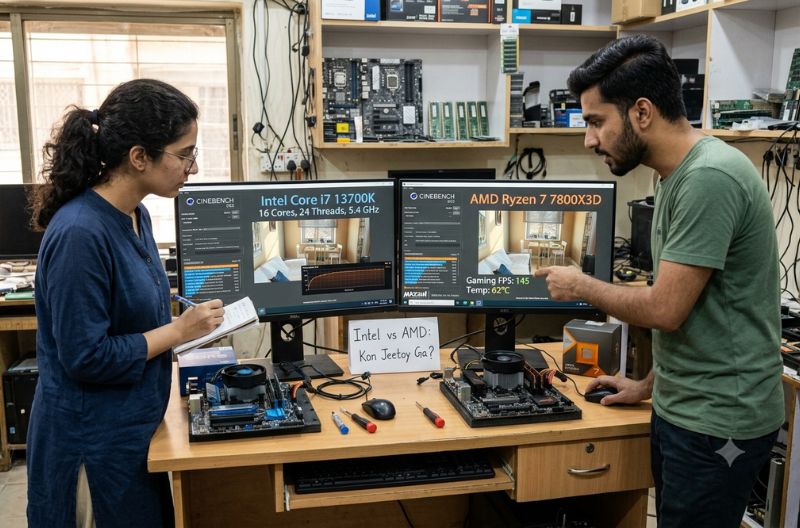
Choosing the right processor affects nearly every aspect of your computer’s performance.
Here are several reasons why comparing Intel and AMD matters:
- Determines overall system speed
- Impacts gaming performance
- Affects multitasking capabilities
- Influences video editing and rendering times
- Controls power consumption
- Determines upgrade possibilities
- Helps maximize your budget
- Ensures compatibility with future hardware
A well-informed decision can save money while providing better long-term performance.
Detailed Step-by-Step Guide
Step 1: Understand Processor Basics
Before comparing brands, it’s important to understand common CPU terms.
Cores
A core is an individual processing unit inside the CPU.
More cores improve:
- Multitasking
- Video editing
- Streaming
- Programming
- Content creation
Threads
Threads allow one core to handle multiple tasks simultaneously.
Modern Intel and AMD processors usually support simultaneous multithreading, improving efficiency during demanding workloads.
Clock Speed
Measured in GHz, clock speed indicates how fast each core processes instructions.
Higher clock speeds generally improve:
- Gaming
- Office work
- Everyday responsiveness
Cache Memory
CPU cache stores frequently accessed data close to the processor.
More cache often results in:
- Faster application loading
- Better gaming performance
- Improved multitasking
Step 2: Compare Intel Processor Features
Intel processors are known for delivering excellent responsiveness and high single-core performance.
Popular Intel processor families include:
- Intel Core i3
- Intel Core i5
- Intel Core i7
- Intel Core i9
- Intel Core Ultra series
Intel Strengths
- Excellent gaming performance
- Strong single-thread performance
- Efficient integrated graphics on many models
- Stable platform support
- Excellent software optimization
Intel processors often perform exceptionally well in applications that rely heavily on single-core speed.
Step 3: Compare AMD Processor Features
AMD has become a serious competitor with its Ryzen processor lineup.
Popular AMD processors include:
- Ryzen 3
- Ryzen 5
- Ryzen 7
- Ryzen 9
- Ryzen Threadripper
AMD Strengths
- Excellent multi-core performance
- Better value for money
- Larger cache on many CPUs
- Efficient architecture
- Strong productivity performance
AMD has become especially popular among creators, programmers, and multitaskers.
Step 4: Gaming Performance Comparison
Gaming is one of the biggest reasons people compare processors.
Intel Gaming Performance
Intel traditionally leads in:
- High frame rates
- Competitive gaming
- Fast response times
- Better performance in CPU-intensive games
Popular esports games often benefit from Intel’s higher clock speeds.
Examples include:
- Counter-Strike
- Valorant
- Rainbow Six Siege
AMD Gaming Performance
AMD has significantly narrowed the gap.
Many Ryzen processors now compete directly with Intel, especially models featuring large cache technology.
AMD performs exceptionally well in:
- AAA games
- Open-world titles
- Streaming while gaming
- High-resolution gaming
For most gamers today, both brands provide an excellent experience.
Step 5: Productivity Performance
If your work involves demanding software, processor choice becomes even more important.
AMD Advantages
AMD often leads in:
- Video editing
- 3D rendering
- Animation
- Software development
- Heavy multitasking
Extra cores help reduce rendering times significantly.
Intel Advantages
Intel performs exceptionally well in:
- Office applications
- CAD software
- Photo editing
- Business productivity
- Everyday computing
Some professional applications remain better optimized for Intel processors.
Step 6: Power Efficiency
Power efficiency affects:
- Laptop battery life
- Heat generation
- Cooling requirements
- Electricity usage
Recent processor generations from both Intel and AMD have improved dramatically.
AMD processors often consume less power under sustained workloads.
Intel processors deliver excellent performance but may consume more power during peak operation, especially high-end models.
Step 7: Integrated Graphics
Not everyone buys a dedicated graphics card.
Integrated graphics become important for:
- Students
- Office users
- Casual gaming
- Home computers
Intel offers strong integrated graphics across many processor models.
AMD also offers processors with integrated Radeon graphics, often delivering impressive gaming performance without requiring a separate GPU.
Step 8: Platform and Upgrade Options
Another important consideration is motherboard compatibility.
Intel
Intel frequently introduces new motherboard chipsets with new processor generations.
This sometimes requires purchasing a new motherboard when upgrading.
AMD
AMD has built a reputation for longer motherboard compatibility.
Many AMD users can upgrade to newer processors without replacing their motherboard, reducing upgrade costs.
Step 9: Pricing Comparison
Budget plays a huge role when purchasing a processor.
Entry-Level
Intel and AMD both offer affordable options suitable for:
- Web browsing
- Office work
- Online classes
- Streaming
Mid-Range
This is where AMD often provides exceptional value.
Ryzen 5 and Ryzen 7 processors frequently offer more cores at competitive prices.
High-End
Intel Core i9 and Ryzen 9 processors target enthusiasts and professionals.
Both deliver incredible performance, with pricing depending on specific models and market conditions.
Step 10: Which Processor Should You Choose?
Your decision depends on your primary use.
Choose Intel if you:
- Primarily play competitive games
- Want excellent single-core performance
- Prefer maximum compatibility
- Need strong integrated graphics
- Focus on everyday responsiveness
Choose AMD if you:
- Edit videos frequently
- Stream while gaming
- Perform heavy multitasking
- Need more cores for the price
- Want better long-term upgrade flexibility
Neither brand is universally better.
The best processor is the one that matches your needs.
Benefits of Intel vs AMD Processors Compared
Comparing processors before buying offers many advantages.
- Helps avoid overspending
- Improves gaming performance
- Maximizes productivity
- Ensures better multitasking
- Matches hardware to your workload
- Simplifies future upgrades
- Improves long-term value
- Increases system lifespan
- Prevents compatibility issues
- Helps select the best motherboard
Disadvantages / Risks
Ignoring processor comparisons can lead to several problems.
- Buying more performance than needed
- Paying unnecessary premium prices
- Limited future upgrades
- Poor gaming performance
- Reduced productivity
- Increased power consumption
- Higher cooling costs
- Compatibility challenges
Common Mistakes to Avoid
Many first-time buyers make avoidable mistakes.
Buying Based Only on Brand
Don’t assume Intel or AMD is always better.
Compare individual processor models instead.
Ignoring Your Actual Needs
Office users don’t need high-end gaming processors.
Gamers may not benefit from workstation CPUs.
Buy according to your workload.
Forgetting Motherboard Compatibility
Always verify processor socket compatibility before purchasing.
An incompatible motherboard can require expensive replacements.
Overlooking Cooling Requirements
Powerful processors generate more heat.
Invest in an adequate cooling solution for stable performance.
Focusing Only on Core Count
More cores aren’t always better.
Some applications benefit more from faster individual cores than higher core counts.
Ignoring Future Upgrades
Think about how long you plan to keep your computer.
Choosing a platform with better upgrade options can save money later.
FAQs
Which processor is better for gaming, Intel or AMD?
Both are excellent choices. Intel often excels in competitive gaming due to strong single-core performance, while AMD performs exceptionally well in modern AAA games and multitasking.
Is AMD cheaper than Intel?
In many price ranges, AMD offers better value by providing more cores for similar prices. However, pricing varies depending on the processor generation and current market conditions.
Which processor is better for video editing?
AMD generally performs better in video editing because many Ryzen processors include higher core counts, reducing rendering times.
Do Intel processors last longer than AMD processors?
Both brands produce reliable processors capable of lasting many years when properly cooled and maintained.
Which processor is better for students?
Students performing basic tasks such as web browsing, online learning, and document editing will find both Intel Core i5 and AMD Ryzen 5 processors more than sufficient.
Should I upgrade my processor or buy a new computer?
If your motherboard supports newer processors, upgrading the CPU can significantly improve performance. Otherwise, purchasing a new system may provide better long-term value.
Expert Tips & Bonus Points
Follow these expert recommendations before buying your next processor.
- Compare complete system costs, not just CPU prices.
- Pair the processor with sufficient RAM.
- Install a fast SSD for noticeable performance improvements.
- Choose quality cooling for high-performance CPUs.
- Keep BIOS updates current.
- Match the processor with an appropriate graphics card.
- Don’t overspend on features you’ll never use.
- Read benchmark comparisons for your favorite applications.
- Consider future upgrade paths before purchasing.
- Balance your budget across the entire PC build rather than spending everything on the processor.
Conclusion
Choosing between Intel and AMD has become more challenging because both companies now produce outstanding processors across every major price category. Rather than asking which brand is universally better, it’s far more useful to consider how you plan to use your computer. Throughout this Intel vs AMD Processors Compared guide, we’ve explored the strengths of each platform, from gaming performance and productivity to power efficiency, integrated graphics, pricing, and upgrade potential.
If your priority is competitive gaming, fast everyday responsiveness, or software that benefits from strong single-core performance, Intel remains an excellent option. On the other hand, if you frequently edit videos, stream, compile code, or run demanding multitasking workloads, AMD often delivers exceptional value with its higher core counts and efficient architecture.
Remember that a processor is only one part of a balanced computer. Pairing it with the right graphics card, sufficient memory, fast storage, and a compatible motherboard is equally important for achieving the best results. Take time to compare individual CPU models instead of relying solely on brand names, and choose the option that aligns with your budget and long-term goals.
With the knowledge you’ve gained from this Intel vs AMD Processors Compared article, you can make a confident purchasing decision and build or buy a computer that delivers reliable performance for years to come.